

Every October we take the same call. The second refrigerator in the garage — the one holding the drinks, the turkey that will not fit indoors, the overflow from a big shop — has stopped keeping things cold. Or worse, the fridge section is fine but everything in the freezer has gone soft.
Nothing has broken. The appliance is doing precisely what it was built to do, in a place it was never built to be.
A thermostat measures the room, not the food
Almost every domestic refrigerator uses a single temperature sensor mounted in the fresh-food compartment. When that compartment warms up, the sensor calls for cooling and the compressor starts. When it cools down, the compressor stops.
Now put that appliance in a garage in New England in October. The garage drops to 38°F overnight. The inside of the fridge is already at 38°F without the compressor ever running. So the sensor never calls for cooling, and the compressor never starts.
The fridge compartment is fine — it is being refrigerated by the weather. But the freezer, which has no sensor of its own and depends entirely on the compressor running, slowly climbs above freezing. Your ice cream softens while the milk beside it stays perfectly cold.
That is the classic garage failure, and it catches people out because the symptom looks backwards.
The second problem: oil that is too thick to pump
The other half of the story is the compressor itself.
Refrigerant compressors are lubricated by oil that sits in the bottom of the compressor housing. That oil has a working viscosity range. Below roughly 40°F it starts to thicken, and below freezing it can get stiff enough that the compressor struggles to start against it.
A compressor that strains to start draws heavy current, trips its overload protector, rests, and tries again. You hear it as a click every few minutes and nothing else. Do that for a whole winter and you can genuinely shorten the life of an otherwise healthy appliance.
So the cold does two things: it stops the thermostat asking for cooling, and it makes the cooling harder when it is finally asked for.
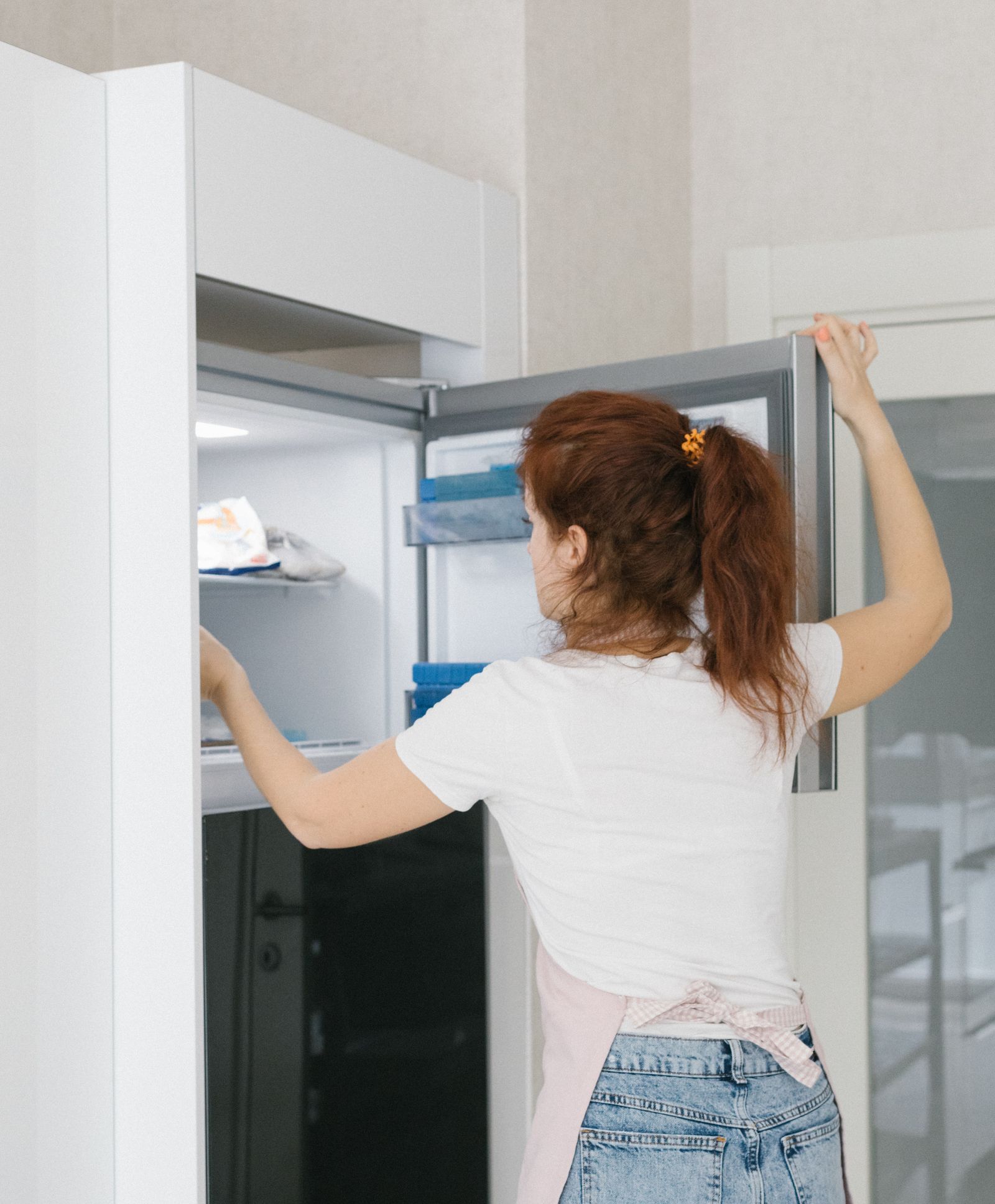
What the manual actually says
Check the model's rating plate or manual for an ambient temperature range. Most standard refrigerators specify something like 55°F to 110°F. A few are labelled for garage use and carry a heater and a second sensor precisely to handle this.
If your appliance is not one of those, it is being run outside its specification. That is not a fault, and no repair will change it.
What actually works
Heat the space, not the fridge. If the garage can be kept above 55°F, everything behaves normally. For most people this is not realistic, but it is the only complete answer.
Move it inside for the winter. A basement is usually warm enough and stable enough. This is what we recommend most often because it costs nothing.
Buy a garage-ready model if the appliance genuinely has to live out there year round. They exist, they are labelled, and they have the heater and second sensor built in. Paying for one is cheaper than replacing a compressor.
Garage heater kits are sold for some brands. They are a small heating element that warms the sensor so the compressor keeps cycling. They work, they are model specific, and they do nothing about the oil viscosity problem — so they solve half of it.
What does not work
Turning the thermostat to its coldest setting does not help. The sensor is still reading a compartment that is already cold; asking for colder does not make it ask more often in any useful way.
Putting a light bulb or space heater inside the cabinet is something we see, and we would rather you did not. You are running an unattended heat source inside a sealed box full of plastic, next to a compressor, in a garage. The risk is not worth the drinks.
When it is actually broken
All of the above assumes the appliance worked fine through the summer and stopped when the weather turned. That is the pattern.
If instead it stopped in July, or it is warm in both compartments, or it runs constantly and never reaches temperature, then the weather is not your problem and you have a genuine fault — most often a frosted evaporator, a failed condenser fan, or a start relay. Those are all same-visit repairs in most cases.
One test settles it: bring the appliance into a heated space for a day. If it cools properly, the cold was the cause. If it does not, call somebody.
The honest summary
A refrigerator in an unheated New England garage between November and March is being asked to do something it was not designed for. If yours has quit for the season, the most likely correct action is to move it, not to repair it — and we will tell you that on the phone before sending anyone out.
If you have run through the above and the symptoms do not match, refrigerator repair and freezer repair are both same-day calls for us across Greater Boston. Ring (617) 685-8530 and describe what each compartment is doing; that one detail usually tells us the answer before we arrive.


